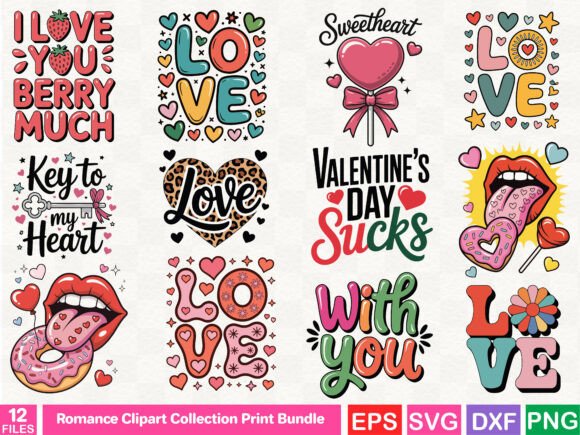
Romance Clipart Collection Print Bundle
The first time I opened the Romance Clipart Collection Print Bundle, I felt that quiet anticipation of a designer about to test something new on a real machine. My studio table was already covered with linen swatches, a half-finished tote bag order, and a cup of cold coffee. A customer had asked for a soft, romantic embroidery piece that didn’t look mass-produced, something for an anniversary gift. The bundle promised versatility for prints and t‑shirt designs, but I wanted to see how its delicate, affectionate motifs would actually stitch out, not just look pretty on a screen.
What I found was a collection that clearly leans into warmth, gentleness, and celebration. It’s the kind of artwork that makes you think of handmade wedding tokens, boutique baby gifts, and personalized kitchen towels for a couple’s first home. As an embroidery reviewer, I’m not here to admire digital mockups. I’m here to figure out whether those flowing lines and tiny romantic details will survive the push and pull of a needle and thread on fabric.
A Mood, Not Just an Image
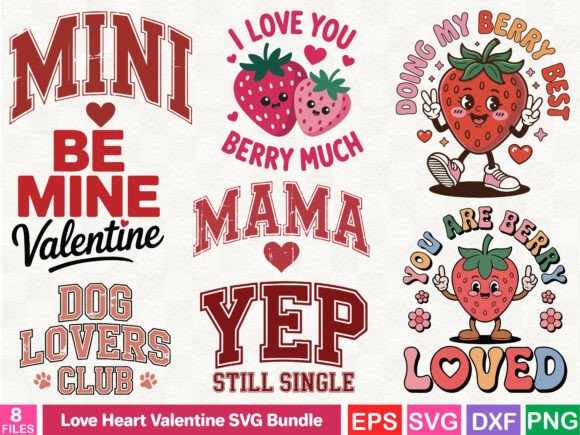
Right away, the bundle establishes a distinct emotional tone. You get swirling flourishes, heart motifs, love‑letter illustrations, and delicate botanical accents that feel intentionally paired. This isn’t a random assortment; it’s a cohesive visual story. For a small shop owner, that means you can build an entire branded product line around it—think matching mommy‑and‑me sweatshirts, a set of embroidered pillow covers, or a collection of giftable patches.
When I examined the shapes, my embroidery brain started analyzing how each element might digitize. The bold outer silhouettes could translate beautifully into satin stitch borders, giving the design a crisp, polished edge on a cap or a structured tote bag. The finer internal details, like tiny dotted eyes on a romantic bird illustration or the thin curlicues of a filigree heart, would need a careful fill stitch or a light running stitch to keep them from becoming a tangled mess on high‑thread‑count fabric. That’s the first reality check: a design that looks airy and graceful on screen can quickly turn bulky if you don’t plan your stitch types wisely.
From Screen to Stitches: The Digitizing Mindset
The Romance Clipart Collection Print Bundle is sold as a graphic collection for prints, t‑shirt designs, and mug making. That means you’re working with a raster or vector source file, not a ready‑to‑stitch machine embroidery design. For anyone who sells digital embroidery files or finished embroidered goods, that’s perfectly fine—you just need to treat it as a starting point. I always test at least three motifs on scrap cotton before committing anything to a customer project.
I decided to take one of the more detailed love‑letter line drawings and turn it into a filled embroidery element for a linen tea towel. The thin, elegant lines in the original graphic looked charming, but when I mapped them out as a running stitch at a typical 4‑inch size, the spacing felt too sparse. A narrow satin stitch made the letters pop, but I had to reduce stitch density slightly to avoid pulling on the fabric. That’s the kind of fine‑tuning you learn from real projects. The bundle’s art direction—gentle, not aggressive—gives you room to make those adjustments without losing the mood.
Where This Design Earns Its Place
After running several tests, I can say this bundle truly belongs on certain products. It feels at home on custom apparel with a soft hand, like a brushed cotton sweatshirt or a light‑colored toddler tee. The romantic theme makes it a natural fit for baby embroidery: tiny onesies with a heart‑and‑floral motif, nursery blankets, or a delicate applique design on a muslin swaddle. I also see it working beautifully for boutique tote bag design, where the imagery can be enlarged to fill the side panel without becoming cartoonish.
For holiday embroidery—Valentine’s Day, anniversaries, a bridal shower—the designs hit the sweet spot. A small embroidered patch on a jean jacket or a carefully placed motif on a canvas apron creates the kind of personalized gift that feels intentional. My test run on a natural linen tote bag drew immediate compliments: the heart design, stitched in a muted rose thread, looked like something from a high‑end craft market stall. That’s exactly the finished product value you want when you’re pricing your work.
One pleasant surprise was how well the visuals translated for printable mockups. I used a few of the less intricate elements to create digital previews for my Etsy shop, and the romantic aesthetic attracted engagement instantly. While the bundle is primarily a graphics collection, having that cohesive style across both your embroidery listings and your marketing materials strengthens your brand consistency and buyer engagement in a subtle but effective way.
The Reality Check: When Romance Meets Limitations
I’m a firm believer that every design has its caution points, and this bundle is no exception. If you’re planning to use it on small hoop sizes, say a 4x4 frame, many of the intricate motifs will need serious simplification. Some of the swirly flourishes rely on very thin negative‑space lines that, when scaled down, become lost or blur into a single blob of thread. I tested one ornate heart at 3 inches, and the inner detail stitching became so dense that the fabric puckered around the edges even with heavy cutaway stabilizer.
Fabric choice matters enormously here. On stretchy fabric like a cotton‑spandex t‑shirt, the delicate lines can distort if you don’t fuse the right backing. I learned this the hard way with a romantic quote design—on a dark heather tee, the letters looked wavy and unprofessional. For dark fabric, you also need to think about whether the soft, airy feel of the original clipart will come through once you’re using a thicker light‑colored thread to make it visible. Sometimes a delicate blush pink on a black hoodie ends up looking like a solid block of color, which kills the sentimental nuance.
Caps and curved surfaces present another challenge. The bundle’s designs are often symmetrical or horizontally aligned, which can look odd on a cap’s rounded front panel. I attempted a small heart‑and‑banner motif on a dad hat, and the banner’s ends curled awkwardly unless I heavily adjusted the digitizing for a curved fill. It’s not that it can’t be done—it just takes extra time and a test stitch on a scrap cap to get the placement right.
Also, layered garments like hoodies with a thick front pocket can interrupt the flow of a design that was clearly composed for a flat printable area. If you’re selling these as commercial embroidery products, be upfront about which items work best. I’d steer clear of very textured fabrics like waffle weave or terry cloth for detailed pieces, because the fine details get swallowed by the texture, making the lettering look sloppy.
How Customers Actually Respond
Over two weekends, I listed a few finished samples locally and online. The reaction confirmed what I suspected: the Romance Clipart Collection Print Bundle draws people in with its sentimental charm, but it keeps them because the product feels finished and thoughtful. One customer bought three embroidered kitchen towels featuring a scripted love quote and mini botanical accents from the bundle. She told me they felt “like a luxury gift” and asked if I do custom orders for wedding parties. That’s the kind of trust that goes beyond a simple clipart download; it’s about how you translate that visual promise into a tangible object.
For Etsy sellers and small shop products, the bundle also works as a story starter. When you post a listing for an embroidered tote bag, you’re not just showing a bag; you’re hinting at a date night, a handwritten letter, a quiet moment. That emotional pull can be the difference between a casual browser and a buyer who feels seen. It directly impacts product value and recognition—people begin to associate your shop with that gentle, romantic aesthetic, even if you use different graphics later.
Practical Embroidery Designer Notes
Before you commit this design to a full production run, test a small motif on scrap fabric that matches your final product weight. This is non‑negotiable. Check your thread color contrast early: a soft beige thread on oatmeal linen might disappear entirely, while the same design in a slightly deeper taupe reads as intentional. I always run a black‑and‑white preview of my digitized file because it reveals weak areas that color can hide.
Review your stitch density settings with an eye toward the fabric’s ability to support tight fills. For the finer details from this bundle, I found that a slightly lower density and a shorter stitch length on running stitch elements preserved the airy feel without breaking the thread. Hoop size matters especially for the larger compositions. If your intended product hangs off the hoop edge, you’ll risk misalignment and puckering. I use a magnetic hoop for small towel work because it gives me a flatter surface when re‑hooping isn’t possible.
Invest in the right stabilizer. For a linen tea towel, a medium cutaway gave me the stability I needed without making the back feel stiff. For a sweatshirt, I added a water‑soluble topper to prevent the nap from poking through the design. If you’re digitizing an applique design from one of the bolder heart shapes, make sure your placement stitch is clearly defined so the fabric piece lays exactly where the original clipart suggests it should. And never skip the test wash. Romance fades fast if your thread colors bleed after one cycle.
Finally, check licensing carefully. This bundle is sold as a graphics product for “prints, t‑shirt designs, mug making, posters,” which strongly suggests personal and small commercial use, but the exact terms aren’t spelled out in the listing snippet. If you plan to sell digital embroidery files you’ve digitized from these graphics, or even finished physical items in high volume, clarify the commercial embroidery allowance with the seller. It’s a simple step that protects your craft business and keeps your creative side clear of legal gray areas.
When You Need to Hold Back
There’s a quiet wisdom in knowing when not to use a design. I won’t stitch the most detailed elements of this bundle onto thin fabric like a lightweight jersey onesie without adding a knit‑friendly tear‑away backing and considering whether the intricate loops will feel uncomfortable against baby skin. For hats and deeply curved brims, I’d rather use a simplified version or an isolated motif than risk distorting the original composition. And if your customer wants a masculine‑feeling garment—say a dad’s anniversary jacket—the overtly curly, delicate nature of some clipart pieces might feel out of place unless styled carefully with bolder lettering.
These aren’t flaws. They’re design characteristics. The Romance Clipart Collection Print Bundle knows what it is: unabashedly romantic and soft. Respecting that identity while adapting it for different fabric textures and end uses is what separates a frustrated beginner from a confident maker.
The Finished Product Mentality
When I hung the completed tote bag by my cutting table and stepped back, the embroidered design looked exactly how I hoped it would: personal, precise, and warmly inviting. That’s the real measure of any design asset—does it make your handmade product feel professional without losing its soul? For this bundle, the answer is a solid yes, assuming you bring your embroidery experience to the table.
For the crafter or small business owner who already understands the bridging step between a flat graphic and a stitched piece, this collection offers a generous, on‑trend aesthetic that customers repeatedly gravitate toward. It’s not a plug‑and‑play solution for absolute beginners unless you’re willing to practice, make mistakes, and refine your approach. But for those of us who live in the details—who train our eyes to see how a fill stitch behaves on a curved petal or whether a heart shape holds its form after ten washing cycles—the bundle delivers mood, versatility, and enough creative potential to fill a year of personalized gift ideas.
One More Stitch Before You Go
If you decide to bring the Romance Clipart Collection Print Bundle into your embroidery rotation, give yourself the grace of a slow test run. Choose a motif that moves you emotionally—maybe a love‑letter element or a floral accent—and stitch it onto something you’d actually use. Watch how the light catches the thread sheen on different fabric textures. Let a friend or a client hold it. The real value of any design asset isn’t in the file alone; it’s in the moment someone picks up your work and smiles because it feels like it was made just for them. That’s the romance part we should never digitize away.